
Self-care toolkits are for individuals with mild to moderate mental health challenges.
Note that for most people with serious psychological conditions, use of self-care toolkits alone
will not be sufficient to resolve the problem. People with serious psychological conditions should
obtain treatment and counselling from a qualified professional.
SELF-CARE TOOLKITS
Self-care toolkits available for download free of charge.
The toolkits are interactive to help with your mental wellness and wellbeing.
Free toolkits can be downloaded without providing your name and email address.
Toolkits cover various topics ranging from youth to seniors.
Everyone can benefit from the self-care toolkits.
Support and guidance for individuals, family and friends.
Toolkits are large files, which can result in slow download speeds.

To complement the self-care toolkits, we have compiled a selection of powerful and inspiring
TED Talks that encourage personal growth,
learning, and self-discovery.
Chosen for their clarity, depth, and real-world relevance, these talks offer valuable insights and practical perspectives that can inspire positive change. They can be used as tools for
self-reflection, personal development, and meaningful discussions with others.

SELF-CARE DEPRESSION
PROGRAM
This guide teaches a set of antidepressant skills
you can use to manage depression.
Sometimes the skills can be used on their own,
when the depression isn’t too severe.
Sometimes they have to be used along
with treatments by professionals.
Three steps: reactivating your life;
changing negative thinking habits;
and solving problems as they arise.

ANTIDEPRESSANT SKILLS
AT WORK
This book is intended for working people
with low mood, at risk of depression or have developed depression. Individuals who have been
off work for a period of time and are reentering
the workplace. Partners, family members, friends or workplace colleagues who want to help an individual suffering from low mood or depression.
Employers, supervisors or managers concerned
about the well-being of their staff.

ANTIDEPRESSANT SKILLS
FOR TEENS
This Dealing With Depression guide is intended for
teens with depressed mood, concerned adults who want to help a depressed teen and other teens
who want to help a friend or family member.
Learning and practicing the skills in this
guide, developing antidepressant skills, is likely
to be very helpful in overcoming depression.
Three skills you will learn are realistic thinking,
problem solving and goal setting.
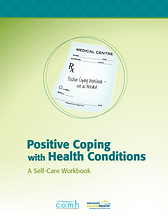
POSiTIVE COPING WITH
hEALTH CONDITIONs
This workbook will help you deal with the stress
symptoms that accompany health conditions.
If you learn and practice the Positive Coping
Skills, you’ll become more effective at dealing
with stress. That will make it easier to handle
your health condition and will help make your
life more rewarding. A valuable tool for
friends and family to support people
with health conditions.


INNER JOURNEY JOURNAL
THE HERO'S MINDSET
The Inner Journey Journal,
a guide designed to transform lives by
unlocking the hero within, provides
a safe space for self-exploration.
Created by students for students, the journal
uses reflective prompts to encourage individuals
to find their inner hero and build a better
relationship with themselves, helping them
become their best selves.

gRIEF & lOSS WORKBOOK
Grief is universal, but the way we experience
it is deeply personal.
This workbook is a compassionate, practical guide designed to help you navigate life after loss.
Whether from death, illness, separation, trauma,
or other major life changes.
More than a book, it is a companion for your healing journey - helping you move through grief
at your own pace, while honoring your loss and discovering hope for the future.

GETTING BETTER MY WAY
SELF-MANAGEMENT SUPPORT
Are you having difficulties related to mental health challenges? You may find this tool useful. You can regain a sense of balance and feel good again,
despite the challenges. The tool is designed to help you identify strategies to get better and to
take care of your health.
Self-management is taking control through the little things you can do to get better.

GUIDED SELF-MANAGEMENT
TOOLKIT FOR FAMILIES
This toolkit is designed to teach youth with early,
mild symptoms of anxiety, depression,
attention-deficit/hyperactivity disorder (ADHD),
and related disorders (disruptive behavior)
how to develop skills to effectively
manage their symptoms at home.
There are three types of self-management guides:
one for children and their parents,
one for teens, and one for parents of teens.

MANAGING DEPRESSION
DURING PREGNANCY & BEYOND
A Self-help Skills Resource for Women
Living With Depression During Pregnancy,
After Delivery and Beyond.
In this resource, we describe three depression management skills. They are:
• Reactivating your life,
• Thinking realistically, and
• Solving problems.

COPING WITH
SUICIDAL THOUGHTS
If you are thinking about suicide, you are not alone. Many people have thoughts of suicide, for a number
of reasons. Thoughts of suicide can be very scary.
Even though your situation seems hopeless and
you wonder if you can stand another minute
of feeling this bad, there are ways to get through
this and feel better. You don’t have to face this situation alone. Help is available.
Here are a few ideas that you can use right now.

MEN AND SUICIDE
A PREVENTION TOOLKIT
Men are often socialized not to talk about their
emotions, and therefore, men as a group may
mask their stress and deal with emotional pain
through harmful behaviours and actions, and
sometimes suicide, instead of seeking help.
Learn the warning signs and how
suicide can be prevented.
You’ll also learn how to have a conversation
with someone you’re worried about.

PEOPLE WHO HAVE BEEN IMPACTED BY A SUICIDE ATTEMPT
This toolkit focuses on resources for people who
have been impacted by a suicide attempt.
There is no single way or “right” way to cope with thoughts of suicide. People will experience
thoughts of suicide differently, and therefore
the ways of coping with these thoughts will be different for every individual.

PEOPLE WHO HAVE BEEN IMPACTED BY A SUICIDE LOSS
This toolkit focuses on resources for people
who have lost someone to suicide.
There is no single way or “right” way to cope with
a death by suicide. Whether you are a colleague, friend, neighbour, or family member, everyone’s relationship with the person who has died is unique.
This means the loss will affect people differently,
and each person will have their own unique
way of dealing with the loss.

YOUR MOST IMPORTANT ASSIGNMENT IS YOU
A Workbook of Mental Health Activities for Teens.
Learn skills to help you change your negative
thinking, manage and understand your emotions,
and learn new behaviors that will make you feel
better about yourself and the people around you.
If you spend just 10 or 15 minutes a day, you can “train your brain” to stop worrying so much.
36 psychological skills to help make you feel
more in control of your life.
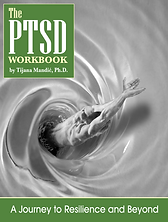
THE PTSD WORKBOOK
A Journey to Resilience and Beyond.
This workbook is, essentially, a guide to a journey.
It is designed to be used, in the case of very
mild trauma, as a self-help guide.
Teaching yourself to take the path of resilience
and to keep growing toward achieving your fullest potential. All of the techniques in this book will be
helpful. It's important to be patient with yourself
and persist in using these techniques even
though they may be difficult at times.